
A car accident can leave you shaken and unsure about what to do next. Even a minor collision may involve injuries, insurance questions, towing decisions, and vehicle damage that is not immediately visible.
Knowing what to do after a car accident can help you stay safe, protect important evidence, and prepare for the collision repair process. Before calling a body shop, focus on personal safety, accident documentation, insurance reporting, and preventing further damage to your vehicle.
Your first priority after an accident should be the safety of everyone involved.
Check yourself and your passengers for pain, bleeding, dizziness, confusion, or difficulty breathing. Ask the occupants of the other vehicle if they need medical help.
Call 911 immediately if anyone is injured, trapped, unresponsive, or experiencing serious pain. The National Association of Insurance Commissioners recommends making safety the first priority and contacting emergency services when someone is injured.
Keep in mind that adrenaline can make some injuries difficult to notice right away. A person may feel fine at the scene and experience pain several hours later.
Avoid moving an injured person unless remaining in place creates an immediate danger, such as fire or passing traffic.
If the accident is minor and the vehicle can be driven safely, move it to the shoulder, a nearby parking lot, or another protected area. Turn on the hazard lights so approaching drivers can see the vehicle.
The NAIC recommends moving a drivable vehicle out of traffic when it is safe to do so.
Do not drive the vehicle if a tire is damaged, the steering feels unusual, fluids are leaking, or a body panel is dragging against the road. Moving a badly damaged vehicle may create another hazard or make the damage worse.
If the vehicle must remain in the roadway, move yourself and your passengers away from traffic when possible.
Contact local law enforcement after the accident, especially if someone is injured, traffic is blocked, property is damaged, or the other driver leaves the scene.
A responding officer can help protect the area, gather information, speak with witnesses, and create an accident report. That report may be useful during the insurance claim and repair process.
Give the officer a clear and factual explanation of what happened. Avoid guessing about vehicle speeds, distances, or details you did not directly observe.
Ask for the officer’s name, department, badge number, accident report number, and instructions for obtaining a copy of the report.
Collect the other driver’s contact, vehicle, and insurance information before leaving the scene.
Important details include:
Confirm the information by looking at the driver’s license and insurance card. Take clear photos of the documents when permission is given.
Only share information needed for the accident report and insurance claim.
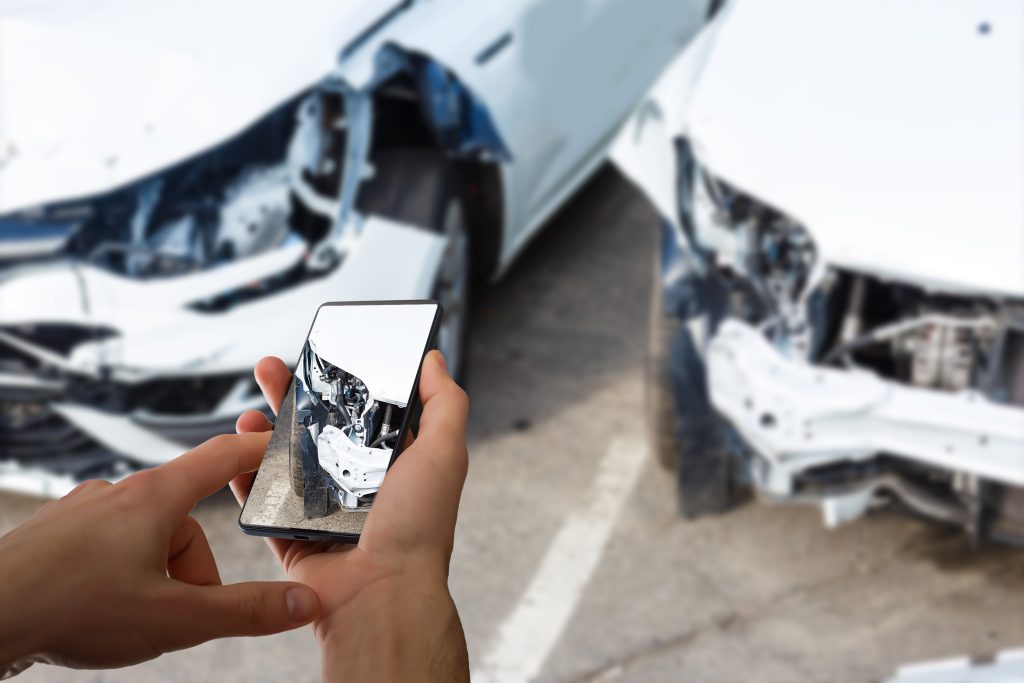
Photos can preserve details that may disappear after the vehicles are moved or the road is cleared.
Start with wide photos showing the complete scene. Include the positions of the vehicles, lane markings, traffic lights, road signs, intersections, and surrounding landmarks.
Then take close photos of the damage to each vehicle. Capture the front, rear, sides, wheels, bumpers, lights, windows, and damaged panels from several angles.
Also photograph:
A short video can also help document loose parts, unusual sounds, warning lights, or problems opening a door, hood, or trunk.
Accident details can become harder to remember once the initial stress passes. Write down what happened while the event is still fresh.
Record the date, time, location, direction of travel, weather, traffic conditions, and road conditions. Describe what happened before, during, and immediately after the collision.
Include details such as the lane you were traveling in, the direction each vehicle was moving, the traffic signal color, and where the impact occurred.
Keep your description factual. Do not add details you are unsure about.
If someone saw the accident, ask for their name and contact information.
A neutral witness may help explain what happened if the drivers remember the collision differently. Do not pressure witnesses to take sides. Ask only if they are willing to share what they observed with the police or insurance companies.
Nearby businesses, homes, traffic cameras, or doorbell cameras may also have recorded the accident. Make a note of possible camera locations before leaving the area.
Stay calm and respectful when speaking with the other driver, but avoid arguing about responsibility.
Do not make accusations or statements accepting fault before the available evidence has been reviewed. Vehicle positions, traffic signals, witness statements, road conditions, and camera footage may reveal important details later.
Provide accurate information to law enforcement and your insurance company. Allow the appropriate parties to review the facts.
Look at the ground around the vehicle from a safe distance. A leak may indicate damage to the cooling system, fuel system, brakes, transmission, or another important component.
Do not touch or smell an unknown fluid. Automotive fluids may be flammable, toxic, or extremely hot.
Move away from the vehicle and call emergency services if you notice smoke, sparks, a strong fuel odor, or a rapidly spreading leak. Do not restart the engine when a serious leak is suspected.
A child car seat may need replacement after an accident, even when no damage is visible.
The National Highway Traffic Safety Administration recommends replacing car seats after moderate or severe crashes. A car seat may continue to be used after a minor crash only when all NHTSA minor-crash conditions are met.
These conditions include no injuries, no airbag deployment, no damage to the door nearest the car seat, no visible damage to the seat, and the ability to drive the vehicle away from the scene.
Review the full guidance on the NHTSA car seat use after a crash page.
Collision damage is not always visible from outside the vehicle.
A bumper may have only a small dent while the reinforcement parts, wiring, sensors, or mounting points behind it are damaged. Modern vehicles often contain cameras, parking sensors, and other safety technology inside exterior panels.
Signs of hidden damage may include:
A professional inspection may uncover damage that cannot be identified from roadside photos.
Do not drive a damaged vehicle simply because the engine starts.
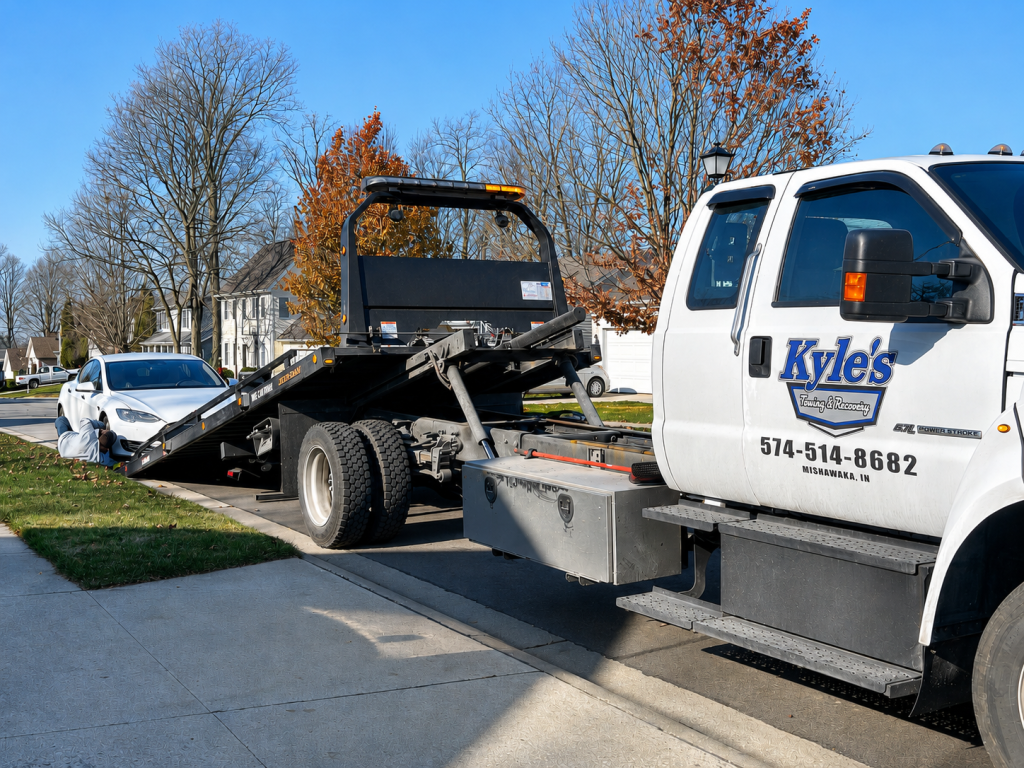
The vehicle may need to be towed if the airbags deployed, the windshield blocks your view, the steering feels different, a tire is damaged, fluids are leaking, or a body panel may come loose.
Driving an unsafe vehicle could put you and other drivers at risk. It may also cause additional mechanical or body damage.
When the condition of the vehicle is unclear, towing is the safer choice.
Before the vehicle is taken away, ask where it is going.
Write down the towing company’s name, phone number, storage address, and any fees you are told about. Keep the towing receipt with your accident documents.
Remove valuable items when it is safe to enter the vehicle. Check for medication, electronics, work equipment, house keys, identification, and garage door openers.
Report the accident to your insurance company as soon as reasonably possible.
Have your policy number, police report information, photos, witness details, and the other driver’s information ready.
Ask about:
Keep notes from each conversation. Record the date, representative’s name, phone number, and instructions you receive.
Additional claim guidance is available from the National Association of Insurance Commissioners.
Keep all accident-related documents in one paper or digital folder.
Save copies of your photos, videos, police report information, insurance emails, claim number, towing receipts, rental documents, witness details, estimates, and repair authorizations.
Organized records can help prevent delays during the claim and repair process.
Before contacting a collision repair facility, gather the information the repair team may need.
Be ready to provide:
Providing complete information helps the repair team understand the situation and explain the next steps.
CRS Custom offers a mobile estimate process that allows customers to begin an estimate request using a smartphone or computer.
Customers can provide vehicle information, describe the damage, and upload photos showing the vehicle from several angles. An in-person inspection may still be needed because photos do not always reveal structural, mechanical, electrical, or safety-system damage.
Visit the CRS Custom mobile estimates page to begin the process.
A proper collision repair should address safety, function, panel fit, and appearance.
Ask how the shop handles structural inspections, replacement parts, paint matching, insurance communication, repair documentation, and final quality checks.
CRS Custom provides car and truck collision repair, bodywork, painting, color matching, and estimate assistance for drivers throughout the Michiana area.
Learn more on the CRS Custom collision repair page.
Knowing what to do after a car accident can help you stay focused during a stressful situation.
Check for injuries, move away from traffic, contact emergency services, collect information, document the scene, and report the accident to your insurer. Do not drive a vehicle with possible steering, tire, structural, lighting, or fluid-system damage.
Once the immediate safety steps are complete, organize your records and contact CRS Custom to begin the estimate and repair process.